Accountability Cuts Both Ways
What the Rassie Erasmus ban tells us about officiating in club rugby
I wrote the first version of this article a while ago. Then I sat on it.
I’ll be honest about why. As a coach, you learn quickly that speaking up about officiating can cost you. It can follow you into future appointments, future matches and future conversations. So I told myself to let it go, to move on, to accept that “it is what it is”.
I was afraid of the consequences.
What happened to Rassie Erasmus this week changed my mind. Not because I think he chose the right words, but because it showed, very clearly, how quickly accountability can be applied when the game wants it to be. If that standard is good enough for the most successful coach in world rugby, it should be good enough for everyone with an influence on a result.
So the time to post this is now.
On Monday, Rassie Erasmus sat in front of the media in Dublin and questioned the officiating in the Springboks’ 21–19 loss to France.
He said France had made 17 knee-drop tackles that went unpunished. He pointed directly at the TMO. And he asked whether choosing not to act on an incident he had seen amounted to “match-fixing”.
By Tuesday, he had been suspended for six Test matches.
An independent panel. A clear process. A sanction with immediate effect. A public statement explaining exactly why.
You can argue about the length of the ban. You can argue about the words he chose. World Rugby itself was clear that challenging a decision is one thing, and questioning an official’s integrity is another. That distinction matters, and I agree with it.
But look at what actually happened in those 24 hours.
A coach said something. There was a process. There was a consequence.
That is accountability.
And it raises the question many of us in club rugby have been sitting with all season:
Where is the same urgency when the mistake is made by the officials?
Accountability is already part of our game
Club rugby is, at its heart, a game for everyone. Players take the field because they love the game, the camaraderie, the competition and what it means to represent a club.
But top-level club rugby in South Africa has evolved. Clubs competing for provincial and national honours have sponsors investing significant money, coaches who are effectively semi-professional, players committing enormous amounts of time, and administrators working tirelessly to build sustainable organisations.
With that evolution comes accountability.
Coaches are held accountable for results. Players are held accountable for performances. Committees are held accountable by sponsors and members. Sponsors look at results when deciding where to invest. Players look at results when deciding where to play.
Everyone understands that actions have consequences. This week, a double World Cup-winning coach found that out again.
So why should match officials be any different?
When the stakes are high
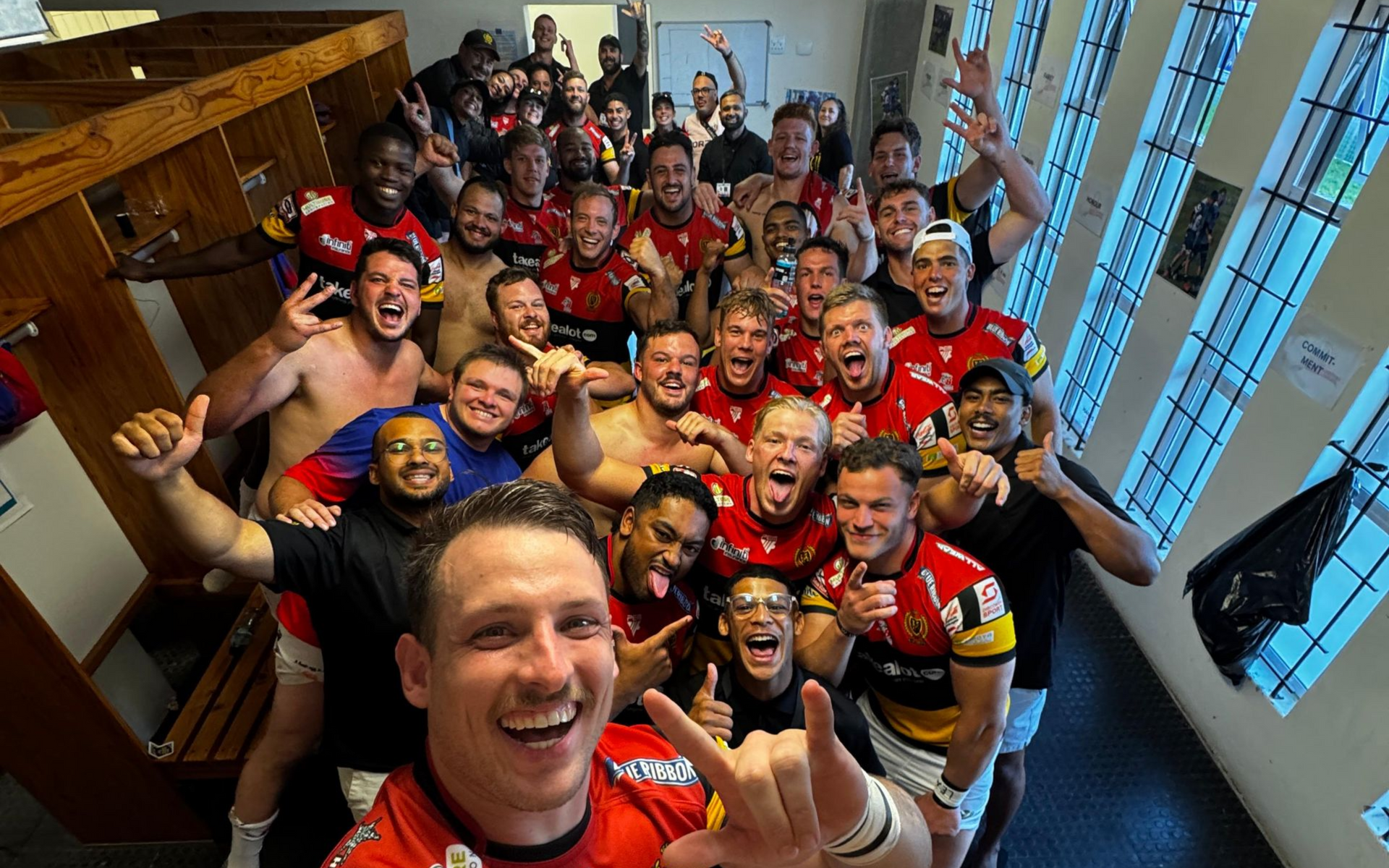
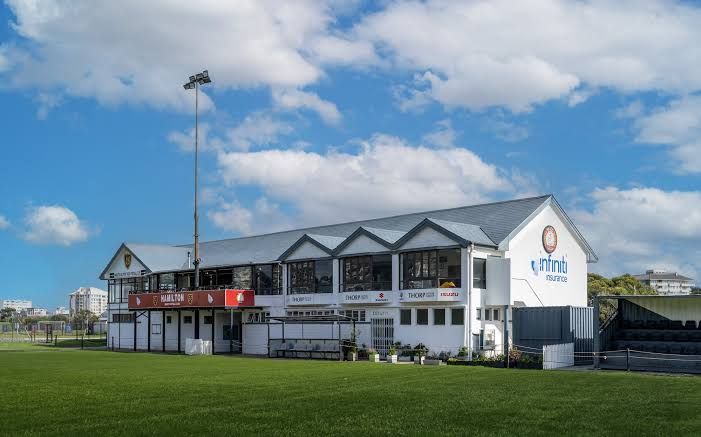
This question came into sharp focus in this season’s Western Province Presidents Cup Super A Final, where the two oldest clubs in South Africa met in a fiercely contested derby.
Villagers entered the play-offs as the number one ranked team. After full time and extra time, the match finished 22–22, and the competition regulations correctly awarded the victory to the higher-ranked team.
There is no argument with the application of that rule.
The issue is how the game got there.
In the 52nd minute, Hamiltons scored to lead 22–10, with the conversion still to come. The fullback struck the kick into a strong wind. According to the original footage and the replay, the ball appeared to pass over the crossbar.
[See video]
Both assistant referees began moving before the ball reached the posts and did not see its final flight. The referee, a SA Rugby Panel referee, ruled that the conversion had not been successful.
There was no review. There was no opportunity to revisit the decision. The score stayed at 22–10 rather than 24–10, with seventeen minutes of rugby remaining.
Villagers fought back and levelled at 22–22. Ten minutes each way of extra time could not separate the teams, and Villagers were correctly awarded the title on league position.
That is the rule. But the bigger question is whether extra time should ever have been needed.
One standard for coaches, another for officials?
Put the two cases side by side.
At Test level, a coach questions the officials and is sanctioned within a day, publicly, through a defined process.
At club level, a SuperSport-broadcast final between two historic clubs, officiated by a SA Rugby Panel referee, may have turned on a decision that the footage suggests was wrong. And as far as the clubs, players and sponsors can see, nothing happens.
No published review. No feedback to the clubs. No visible consequence. Everyone simply moves on to the next weekend.
World Rugby says formal channels exist for raising concerns about officiating. Good. Then those channels need to be real, visible and trusted at every level of the game, including club rugby. Because when coaches believe the proper channel leads nowhere, some of them will reach for the microphone instead. This week showed exactly where that ends.
This is not about attacking three individuals on a field. Referees are human, and anyone who has played or coached knows how hard the job is.
It is about asking whether the system is working.
Where is the accountability?
When a player makes a serious mistake, there is accountability. When a coach crosses a line, there is accountability, as we have just seen. When a club fails to meet its obligations, there are consequences.
So what happens when match officials make a significant error in a high-stakes match?
• Is the decision formally reviewed against the available footage?
• Does the referee team receive feedback?
• Does an incorrect decision affect future appointments?
• Is there a performance-management process?
• Are the clubs told when a significant error has been identified?
If the answer to those questions is no, or nobody knows, then we have built a system where the people with the greatest immediate influence over a result have the least visible accountability for it.
That cannot be healthy for the game.
Protect referees, and protect the game
Referees need protection from abuse, intimidation and personal attacks. Absolutely. Nobody should be harassed for a decision made on a rugby field.
But protecting referees from abuse cannot mean protecting the officiating system from accountability. Those are two completely different things.
Players are reviewed. Coaches are reviewed. Teams are reviewed. Why shouldn’t officials at the top of the amateur and semi-professional game work within a transparent performance-review process?
Accountability does not mean punishment. It means learning. It means identifying mistakes, improving systems, and making it less likely that the same mistake happens again.
So where do we go from here?
The rugby community does not need another argument about whether a kick was over. The footage can be reviewed. The bigger issue is what we do with what happened.
If we want to grow and professionalise top-level club rugby, the officiating structures need to evolve alongside the clubs. That could mean:
• Formal post-match reviews of high-stakes matches.
• Independent review of significant officiating decisions.
• Clear performance-management processes for referees and assistant referees.
• Greater use of broadcast footage where competition regulations allow it.
• A clear protocol for when assistant referees have not had a clear view of a kick at goal.
• Transparent communication with clubs when significant errors are identified.
• A proper channel for clubs to raise concerns without it being seen as an attack on officials, and a response when they do.
• Most importantly, a culture where mistakes are acknowledged, analysed and used to improve the system.
None of this undermines the authority of referees. Quite the opposite. A strong accountability system strengthens the credibility of officials, and gives coaches a better option than the press conference.
The question we should be asking
The question isn’t “Who is to blame?”
The question is “How do we make sure this doesn’t happen again?”
We are asking players, coaches, clubs and sponsors to invest more, prepare better, perform better and be accountable. This week we saw how seriously the game takes accountability when it wants to.
The systems that govern our competitions should carry the same responsibility.
Club rugby deserves that. The players and coaches deserve that. The clubs and their sponsors deserve that. And the referees deserve a system that helps them get better too.
Nobody wins when a final is remembered for an officiating error. Not the winning club. Not the losing club. Not the players, the coaches or the sponsors. And certainly not the game.
Accountability cannot only flow in one direction.
Perhaps now is the time for the stakeholders of South African club rugby to have the uncomfortable conversation.
The Final Pass